
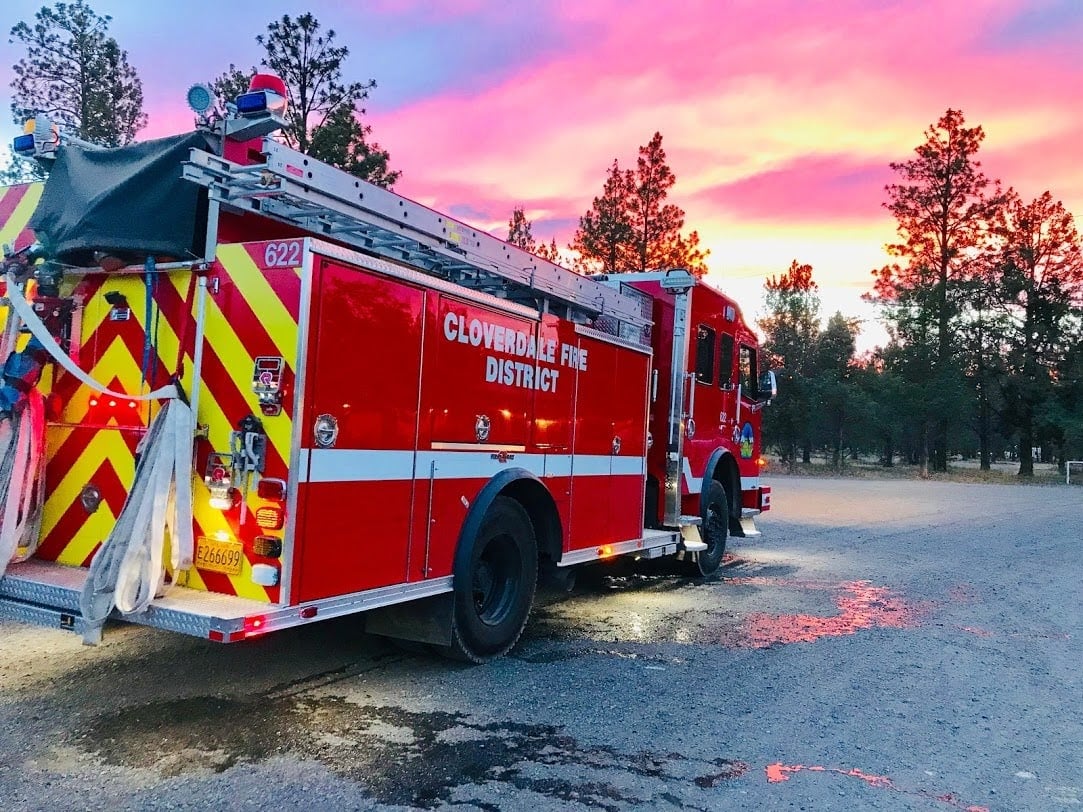
Cloverdale Rural Fire Protection District

Burn rules & regulations
Follow these rules when you burn in Cloverdale Rural Fire Protection District's zones, including any regional rules that apply there. You'll confirm them when you check in, and burning must also be open on the day you burn.
Cloverdale Rural Fire Protection District
Burn season through Apr 30
Contact the Duty Officer at 541-389-2345 with any questions.
Burning Information:
Managing Outdoor Burning Safely is everyone’s job. Your Fire Department has adopted a simple, easy system for monitoring active fires in your area.
Burning Requirements :
1. Burning shall be restricted to cleared areas 40 feet away from any building and 20 feet away from trees.
2. Piles must be less than 10 ft x 10 ft x 10 ft in size and at least 50 feet from structures. Campfires limited to 3’ wide & 2’ tall.
3. Clear to bare ground 10 feet from around the base of the burn pile, burn pit, or burn barrel.
4. Burn early in the morning while temperatures are low and humidity is high, whenever possible.
5. NO burning in winds predicted, or currently above 10 MPH, or temps over 90 degrees.
6. Fires shall be attended by an able-bodied adult until all free burning material has been extinguished.
7. One shovel and water (5 gallons, a 4A extinguisher, or charged hose line).
8. Burning is allowed during daylight hours only, however, fire pits, stumps, and burn barrels may be allowed to smolder after dark. (No new material may be added until daylight.) Exceptions allowed for warming/campfires.
9. The Fire Chief or his designee may, at their discretion, open or close burning, and alter the burning requirements as deemed necessary.
Commercial, Agricultural, and industrial Burn Permits:
Such burning is prohibited unless, in addition to any permit issued by the Cloverdale Rural Fire Protection District, a permit is obtained by the appropriate Forest Protection Agency.
Enforcement:
In accordance with provisions of ORS 478.990 (2) and (3), violations of ORS 478.960 (1) and (4) are misdemeanor violations that carry their own citation schedule.
Deschutes County ordinance is applicable.
If the fire burns out of control do not hesitate to request assistance, CALL 911.
This permit does not relieve the Permittee from responsibility for fire
damage and is subject to cancellation without notice, and is valid only at the
location of permitted burning indicated
above. The permittee shall determine each day before burning whether
such burning is permitted.
To protect air quality, DEQ has the authority, under state law, to prohibit
open burning anywhere in the state on a day-to-day basis.
State air quality rules which govern open burning are found in
Oregon Administrative Rules, Chapter 340, Division 23.
It is against the law to conduct any open burning that:
- Unreasonably interferes with the enjoyment of life or property.
- Creates a public or private nuisance.
- Is a hazard to public safety.
MATERIALS THAT CAN NOT BE BURNED:
- Rubber Products / Tires (includes burning tires to start an approved agricultural waste fire)
- Plastic
- Garbage
- Petroleum and Petroleum-treated materials
- Asphalt or Industrial Waste
- Materials that create dense smoke or noxious odors In or near cities of greater than 4,000 in population. The DEQ prohibits open burning of waste from commercial establishments, construction and demolition activity, and land clearing.
burning closed do to high winds
When you check in, you agree that:
- I have read and understand the above requirements.
State of Oregon rules
Also apply in Cloverdale Rural Fire Protection DistrictAll open burning within fire district boundaries in Oregon shall comply with state laws, including the Oregon Fire Code. Unlawful fires may result in cost recovery fees, Department of Environmental Quality (DEQ) referral, and Oregon Department of Forestry citation when appropriate. Open burning rules shall be clearly posted on fire district websites and available in print. Rules shall use plain language compliant with the Oregon Plain Language Act. Outdoor fires during a declared fire district burn ban are a public safety hazard and may lead to fire district response, extinguishment, and cost recovery fees.
Outdoor fires impairing roadway visibility are a hazard and may lead to fire district response, extinguishment, and possible cost recovery fees. Fires causing emergency medical response may lead to extinguishment and potential cost recovery fees.
Burn complaints are lower priority than emergency responses absent a hazard determination. Complaints shall be reported via published non-emergency lines and prioritized appropriately. Commercial and industrial open burning are prohibited statewide. Construction and demolition debris may be burned outside urban growth boundaries and restricted burn areas with proper permissions. Agricultural burning requires a special permit and compliance with all applicable Oregon Department of Agriculture rules.
Recreational fires must follow published size, setback, and safety requirements. Restrictions may apply during high fire danger.
Backyard burning of approved materials is allowed in some areas on designated burn days. Check with your local fire district for specific rules. All burning must comply with state smoke management rules. Fires must be extinguished if smoke or odor affects others. Any unlawful or non-compliant burning is subject to immediate extinguishment and cost recovery fees.
Debris Burning
Debris burning in Oregon is regulated by state laws and local fire district rules. This document provides an overview of requirements for safe and legal debris burning.
Permits
- Contact your local fire district to determine if a permit is required for debris burning. Some areas require permits for pile burning.
- Permits from the Oregon Department of Forestry (ODF) are required for slash burning. Agricultural burning also requires ODF permits.
- Burning without required permits may result in fines or other penalties.
Allowed Materials
- Only vegetation and woody natural materials from the property may be burned. This includes grass, leaves, needles, brush, and untreated wood.
- Burning of prohibited materials like garbage, plastics, rubber, petroleum products, and chemically treated materials is unlawful.
Pile Requirements
- Piles must be less than 10 ft x 10 ft x 10 ft in size and at least 50 feet from structures.
- Piles should be free of dirt and dried prior to burning.
- Only 2 piles may be burned at once if space allows.
Safety
- Fires must be attended at all times by an alert adult with adequate fire suppression tools.
- Adequate water and hand tools must be close by to extinguish the fire if needed.
- Burning must cease if winds exceed 10 mph or other weather conditions worsen.
- Fires must be fully extinguished by sunset or if smoke creates a hazard.
Air Quality
- Burning is only allowed on designated burn days. Contact your local fire district for updates.
- Smoke that impairs visibility on roadways or causes a health hazard is prohibited.
- DEQ may restrict burning during air quality advisories.
By following these terms and conditions, debris burning can be conducted safely and in compliance with Oregon laws. Failure to comply may result in civil penalties.
Please burn responsibly.